
In a trading environment defined by volatility, companies are being tested on their ability to absorb market and geopolitical shocks. Regulations emerge to support responsible sourcing, supply routes shift, sanctions are imposed, and for many, resilience now depends on traceability.
World Forest ID’s work on birch began in the wake of one such shock. When Russia launched its full-scale invasion of Ukraine in 2022, the world’s largest exporters of birch, Russia and Belarus, were suddenly cut off from global markets. Sanctions imposed by the EU and US banned birch imports into Europe and North America. Overnight, silver birch (Betula pendula), the most widely traded species of the genus, and classed as “Least Concern” on the IUCN Red List, became a high-risk commodity.
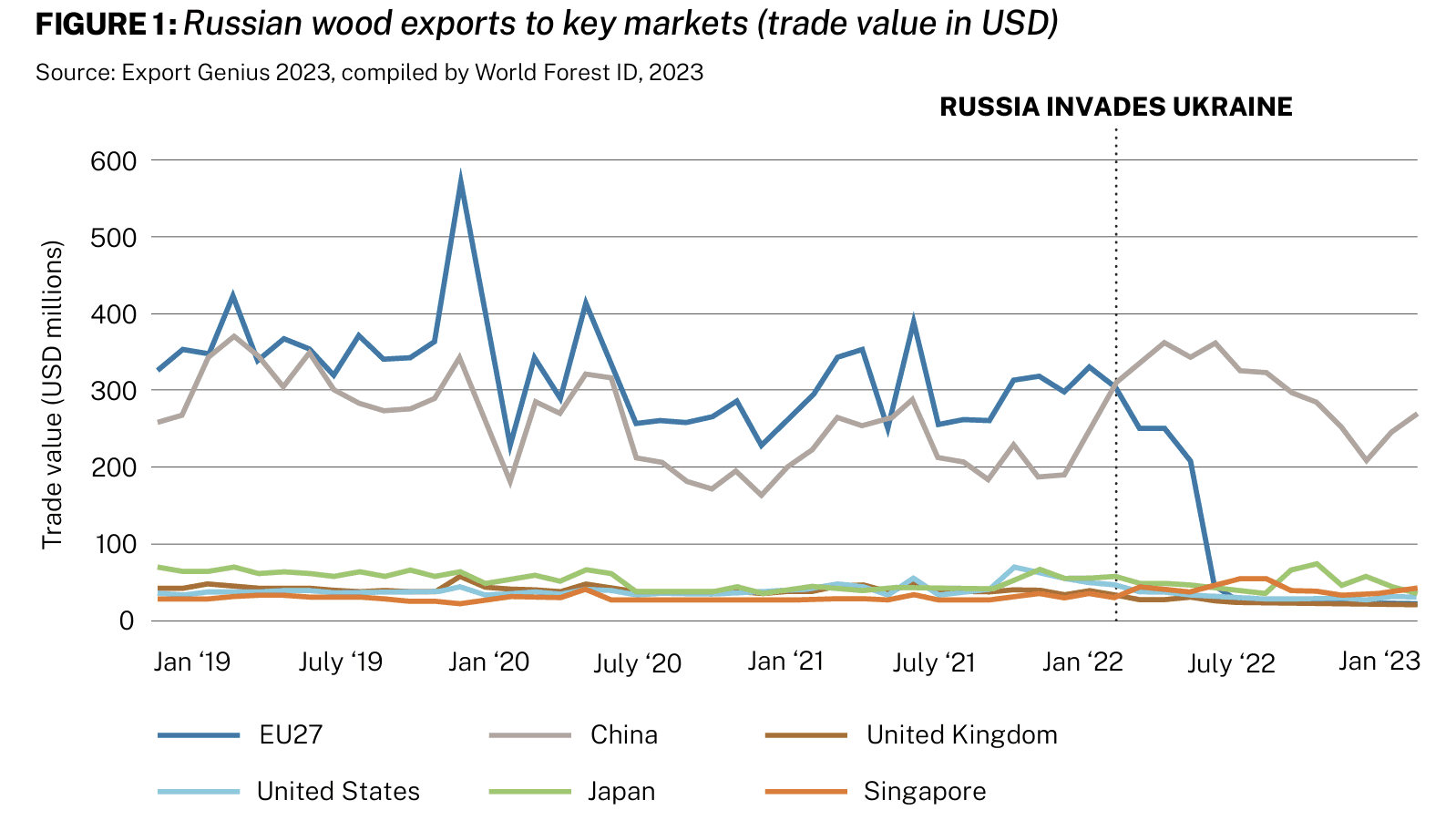
Extract from World Forest ID's 2023 trade analysis of Russian wood exports
Recognizing the need for credible, scientific verification of origin, the UK government funded World Forest ID in 2023 to apply chemical testing to birch supply chains. The aim was to create a reliable, objective method of verifying where birch products really came from, helping regulators and companies navigate this sudden shift in risk.
Later that year, World Forest ID carried out extensive sampling campaigns across Eastern Europe, using the data from the samples collected to build a birch origin model, published in Nature Plants in 2024 and featured in media including The New York Times and The Financial Times.
In 2025, with funding from the European Panel Federation (EPF), the leading industry body for Europe’s wood-based panel manufacturers, World Forest ID further expanded its reference data for birch across the Black Sea Region, and strengthened its practical application, working with industry partners to embed these traceability methods into real-world supply chains.
EPF Technical Director, Kris Wijnendaele, said:
“At EPF, our members span 30 countries. Birch is a significant material for them, and concerns about illegal or sanctioned timber have grown. Supporting World Forest ID’s work helps expand reference data and strengthen traceability and trust.”
As part of this expansion, 200 new birch reference samples have been collected across Georgia, Azerbaijan, Kazakhstan, Armenia and Turkey. These countries are significant collection sites because they sit at the crossroads of birch’s natural and commercial range, spanning temperate Europe and the boreal forests of Central Asia, and border Russia and Belarus. Sampling here ensures the dataset captures the full chemical variability of the species, while strengthening coverage in areas critical to monitoring transshipment.
Bogdan Buliga, who led the field campaign, reflected:
“This collection had its challenges, the logistics, the field conditions, sometimes taking samples in the snow in -30 degrees. But knowing that each sample contributes to something this concrete makes it worthwhile.”
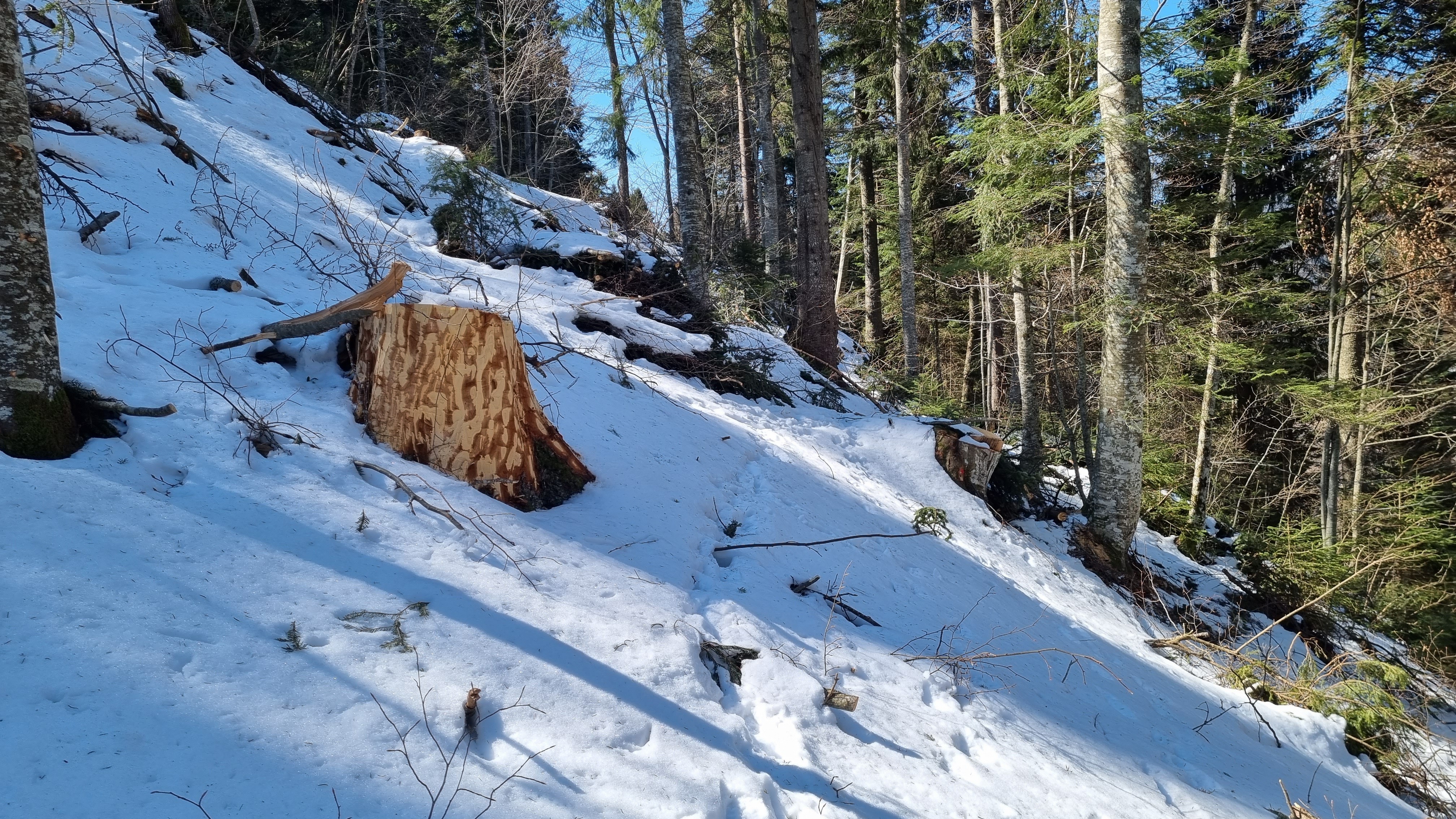
Locating birch for sampling in the Black Sea region
Each sample holds a chemical record of the environment in which its tree grew. Analyzed through World Forest ID’s global laboratory network, these samples reveal distinct isotopic and elemental fingerprints, unique identifiers of geographic origin. Together, they expand the reference data underpinning World Forest ID’s Evaluation Platform, which is enabling regulators, certification schemes and companies to test whether a product comes from its declared source.
At the start of 2025, World Forest ID applied that capability in a timber market study with leading manufacturers and retailers, analyzing donated birch products against our reference data. The findings, published in April, were striking: 41 per cent of samples carried incorrect origin claims (see table below).
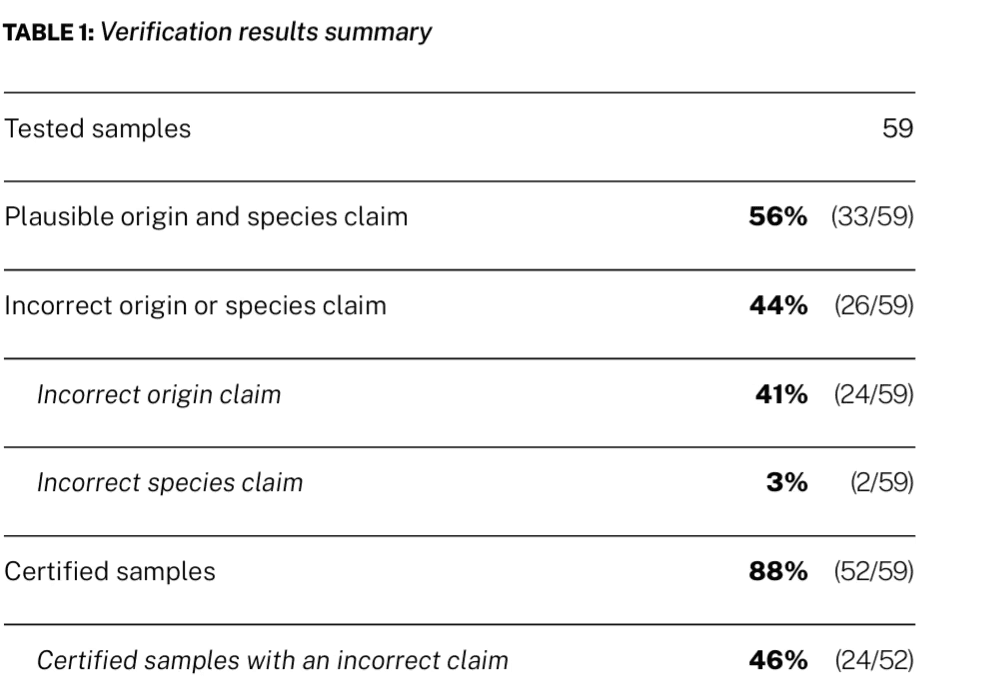
Extract from World Forest ID's 2025 timber market study
Viesturs Krēvics, Director of STIGA RM Kuldīga Plywood Factory and EPF member, added:
“Legislation alone cannot prevent sanctioned plywood from entering the market. By combining proactive industry initiatives with scientifically sound verification, like World Forest ID’s, countries can significantly strengthen controls and protect the legal market.”
The birch pipeline demonstrates what scientific traceability can achieve. The same methods are now being used across the Amazon and Congo Basins, where World Forest ID is developing reference data and origin models for species at highest risk of illegal logging. These include ipê (Handroanthus spp.) and cumaru (Dipteryx odorata) in Latin America, iroko (Milicia excelsa) and doussié (Afzelia bipindensis) across Central and West Africa, and teak (Tectona grandis), trade in which has been sanctioned over links to human rights abuses and conflict financing in Myanmar.
Building a verified dataset for any species is demanding, requiring months of fieldwork, laboratory analysis and model validation. But the foundation now exists, the framework is proven, and the most complex steps have been taken. With the scientific and logistical systems in place, progress now depends on investment in the next stage: the further collection of reference data for an increasing number of timber species and forest-connected commodities.
For the timber industry, World Forest ID’s birch origin model stands as a proof of concept, evidence that science can establish a shared baseline for regulators, certification schemes and companies alike. It shows how traceability can make supply chains more resilient, helping companies navigate sanctions and environmental regulation, as well as growing financial and operational risks posed by climate change and deforestation.
For businesses, these risks shape access to markets, investor confidence, and long-term viability. Chemical testing offers a way to anticipate and adapt to that reality, embedding compliance, credibility and accountability into supply chains.
For forests, it represents something more enduring: a practical way to align trade integrity with environmental protection, ensuring that as global markets change, they do so in the right direction.