What cattle sampling involves

What cattle sampling involves

What cattle sampling involves

1. Register your interest

Tell us where the farm or abattoir is located and whether cattle can be traced from farm to slaughter. We will review the information and contact you to discuss suitability.

2. Discuss the practical details

During an initial call, we will ask:

  • where the cattle were born and raised.

  • how they are identified and traced.

  • where and when they will be slaughtered.

  • what farm and movement records are available.

  • about any access, safety or biosecurity requirements.

This helps us plan around your normal operations.

3. Agree the collection plan

We will agree the timing of the farm visit and slaughter collection in advance. World Forest ID provides the collector, equipment, labels and packaging, and covers the sampling costs.

4. Collect samples at the farm

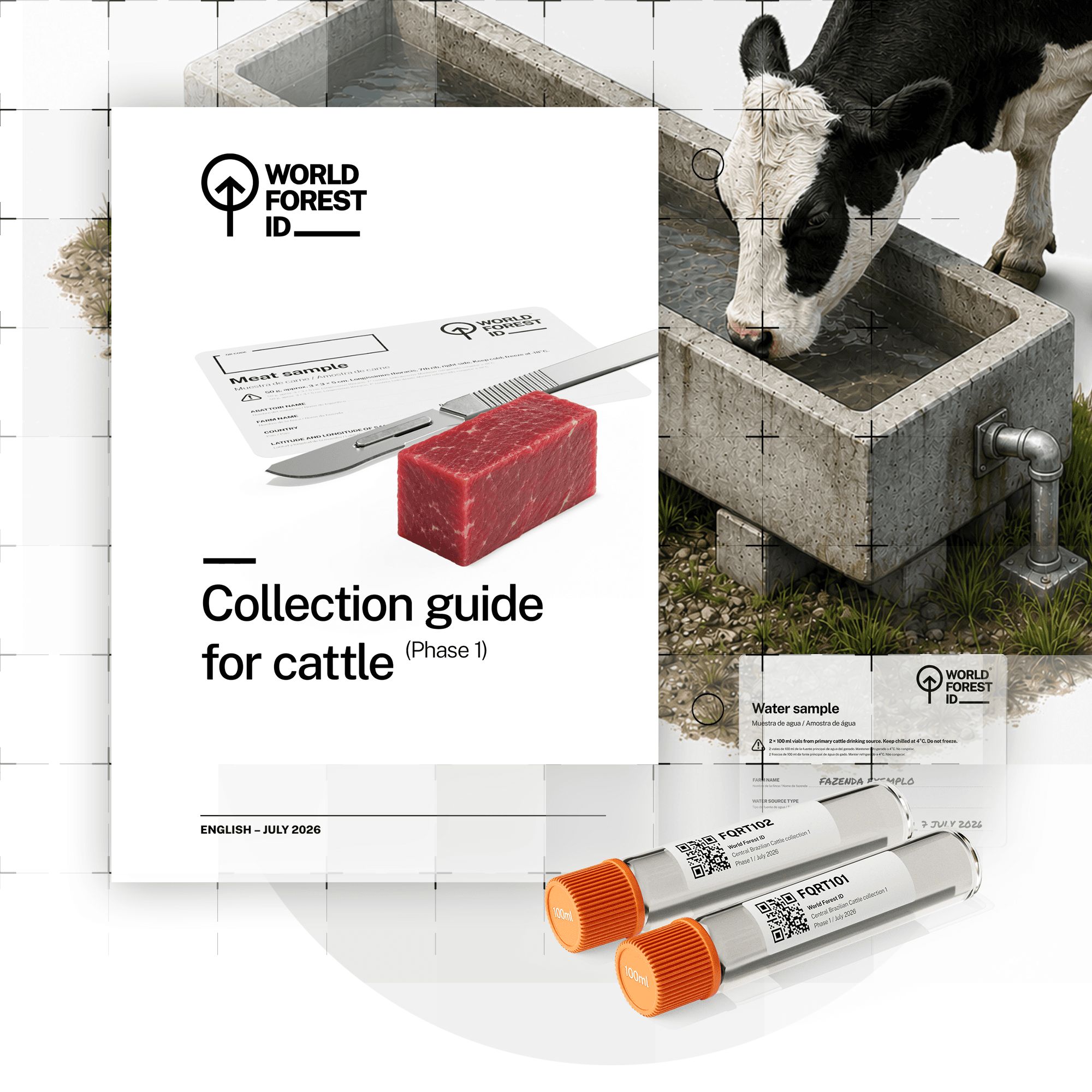
The collector takes small samples of:

  • water used by the cattle.

  • grass from grazing areas.

  • each feed type currently provided.

The farm provides safe access, identifies the participating cattle and shares relevant animal, feed and movement records.

5. Collect samples at slaughter

The same cattle must remain linked to the participating farm. The collector takes tail hair, meat and skin samples. Abattoir staff may be asked to confirm carcass identification and coordinate access during slaughter. Sampling will follow the abattoir’s hygiene, safety and biosecurity procedures and minimise disruption.


CONFIDENTIALITY — This is a research project, not an audit. Farm, abattoir, location and traceability information will be kept confidential. Participating organisations can remain anonymous in published data and project outputs.


WHAT PARTICIPATING FARMS RECEIVE — Participating farms receive a metals screening and micronutrient profile for the sampled beef, providing information about its mineral and nutritional composition.

Date

This project is supported by the Gordon and Betty Moore Foundation, building on its previous support for World Forest ID’s shrimp traceability research.


info@worldforestid.org

World Forest ID is an international nonprofit protecting forests through science-based product verification. © 2026 World Forest ID. All rights reserved. The World Forest ID® logo is a registered trademark of the World Forest ID Association in the United States.

World Forest ID Association
A US 501(c)(3) nonprofit
1 Thomas Cir NW, Suite 700
Washington, DC 20005, USA

World Forest ID Stichting
A foundation registered in the Netherlands
Fluwelen Burgwal 58, 2511 CJ Den Haag,
Netherlands

info@worldforestid.org

World Forest ID is an international nonprofit protecting forests through science-based product verification. © 2026 World Forest ID. All rights reserved. The World Forest ID® logo is a registered trademark of the World Forest ID Association in the United States.

World Forest ID
1 Thomas Cir NW, Suite 700,
Washington, DC 20005, USA

World Forest ID Stichting
A foundation registered in the Netherlands
Fluwelen Burgwal 58, 2511 CJ Den Haag,
Netherlands

info@worldforestid.org

World Forest ID is an international nonprofit protecting forests through science-based product verification. © 2026 World Forest ID. All rights reserved. The World Forest ID® logo is a registered trademark of the World Forest ID Association in the United States.

World Forest ID Association
A US 501(c)(3) nonprofit
1 Thomas Cir NW, Suite 700
Washington, DC 20005, USA

World Forest ID Stichting
A foundation registered in the Netherlands
Fluwelen Burgwal 58, 2511 CJ Den Haag,
Netherlands

document.addEventListener('click', function(e) { if (e.target.closest('a') && e.target.closest('a').href.includes('.pdf')) { gtag('event', 'file_download', { file_name: 'your-document.pdf' }) } })