
July 2026 — Preparing the first cattle collections
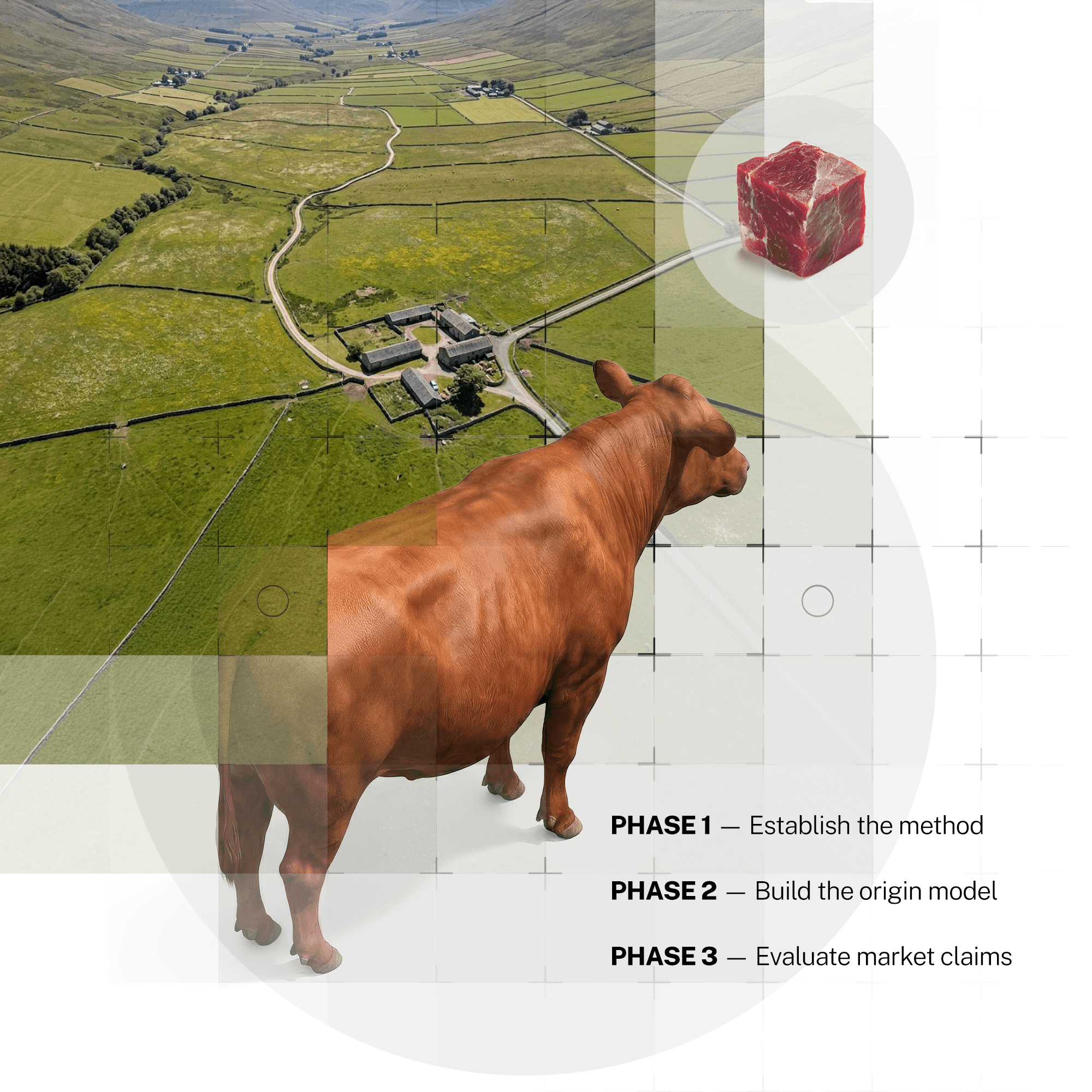
World Forest ID is preparing the first farm-to-slaughter collections for its cattle traceability project. The aim is to test whether chemical fingerprints in farm and animal samples can provide reliable information about where cattle were raised.
Finding suitable farms and abattoirs — The immediate priority is to identify farms with known cattle histories, and abattoirs that can keep those animals clearly linked to the farm during processing. World Forest ID is speaking with prospective partners in the United Kingdom, the United States and Latin America. The strongest options are farms where cattle have remained on one property, together with abattoirs that can handle those animals as a clearly separated batch.
Preparing the collection process — A detailed collection guide has been developed for trained collectors. At each participating farm, collectors will take samples of water, grass and feed. Tail hair, meat and skin will then be collected from five cows linked to that farm at slaughter.
Preparing for laboratory analysis — Alongside partner recruitment, the team is finalizing the analytical procedures and selecting suitable laboratories. Each sample type needs different handling: meat and skin frozen, water chilled, and grass, feed and hair kept dry.
What happens next
The next milestone is the first complete collection, linking farm samples with hair, meat and skin from the same cattle at slaughter. This will test the whole process from animal identification through to sample handling and transport, and produce the first data on which chemical fingerprints give the clearest information about origin.
Help us find suitable participants
We are looking for farms and abattoirs that can trace cattle from the farm through to slaughter.
Date
This project is supported by the Gordon and Betty Moore Foundation, building on its previous support for World Forest ID’s shrimp traceability research.